Showing posts with label Waterman. Show all posts

Saturday, April 5, 2025

Waterman’s “J” Pens: A Mystery Solved

For over 35 years Waterman collectors have puzzled over an extraordinarily rare model typically described as a slip-cap safety pen, with an end knob of distinctive form imprinted 1XJ (“X” denoting the nib size). Some have guessed that it was some sort of prototype or experiment. Few have given full consideration to how nonsensical a slip-cap safety pen would be.


Although the J-series pens do not appear in any known Waterman catalog, they are mentioned in both company and retailer advertisements and – most helpfully – in a Canadian instruction sheet that I found several years ago. The “J” stands for “jointless” and while the nib retraction mechanism is the same as that found on early Waterman safeties, the nib is only intended to be retracted for filling. Once the pen is filled the nib is extended and left that way until refilling is necessary. 


The first ads that mention Waterman’s Jointless date to the last quarter of 1909. The first that I could find appeared in September with all of the rest appearing in December. Many more followed in the first half of 1910 with only sporadic sightings thereafter. The last Waterman ad that I could find that mentions the Jointless is in the May 29, 1913 Geyer’s Stationer – though it does get a passing mention in 1915 in a published transcript of a Waterman executive’s lecture on sales. There it appears only at the tail end of a recounting of miscellaneous models outside of Waterman’s “active line”, suggesting that it was by then out of production but still in inventory or available on demand (American Stationer, vol. 77, May 22, 1915, p. 30).

Abraham & Strauss ad, Brooklyn Daily Eagle, 18 Oct 1909, p. 8; perhaps a soft launch – a limited test release – as no further mentions are to be found until regular mentions begin two months later.


Bookseller and Stationer (Canada), May 1910, p. 4

Ads and instructions only mention three sizes: 12J, 14J, and 15J. Examples of all three sizes are known, all in black hard rubber – though reportedly at least one in red hard rubber is extant. All examples that I have examined have the early internal mechanism with helical grooves cut into the barrel which make the nib carrier twist as it is extended and retracted. 


This mechanism was adopted by Waterman for their safety pens in 1908 to avoid infringing Peck & O’Meara’s patent 523,234, then held by the Modern Pen Company (A. A. Waterman), and appears to have been used only until that patent’s expiration in July 1911. Whether Jointless production continued after that date is an open question. Perhaps it did, for our instruction sheet also has a spare parts page where for both safety and jointless models “Interior Spirals” are listed – a term that could in no way be applied to the straight-track equivalents used in their  earlier versions.


So what was Waterman thinking? The goal was surely to compete with arch-rival Parker, whose own Jointless had been on the market since c. 1898. Parker’s version required the nib assembly to be pulled out manually from the front of the barrel, a process just as messy as dealing with ink residue at the joint of a conventional dropper-filled pen. Waterman’s version obviated that issue, but at the cost of making the pen as complicated as a safety without the benefits of a safety. And this right at the same time that Waterman brought out its sleeve-filler, a simple design which made filling yet cleaner and more convenient. Perhaps no surprise that the Waterman Jointless was so quickly forgotten.

NOTE: Some extant Jointless pens have unusual protrusions on top of their caps, which in at least some cases are made to be inserted into a matching recess in the turning knob (similar to certain Caw's safety models). I have yet to see any mention or illustration of this feature in contemporary advertisements, however.

NOTE: The Canadian instruction sheet that solved this mystery came into my possession way back in 2008. In 2014 George Kovalenko noted the existence of a short-lived Waterman jointless model in a blog post but without recognizing the connection with the so-called slip-cap safeties (whose existence but not correct identity was first noted in print as far back as 1987 in Bob Tefft's Waterman syllabus, with another example shown in Fischler and Schneider's 1994 "Brown Book"). Most of my followup research in digitized periodicals was done in 2017 and the writeup and all photography was done by 2023.

Sunday, February 9, 2025

A Waterman prototype surprise


Many years ago I acquired a group of prototype Waterman Hundred Year pens, all of first year design but most in colors that never made it into production. Recently I finally got around to cleaning them up for proper photographic documentation, and inside the pen shown above there was an interesting surprise.

There was actually a bit of a clue beforehand -- "LEW" and "X" and "I" scratched into the bottom of the feed. Plus of course the pen's completely nonstandard color, an opaque metallic blue.


Nonetheless, there was no anticipating this. Incidentally, several of the pens in this prototype group came with #7 keyhole-vent nibs. As pre-production examples, they might well have been put together before nibs with the Hundred Year imprint had become available.


And here is a more complete view of the feed. At some point I'll have to look to see if a patent application was filed. 


While some of the pens in this group are pristine, such as the light green metallic example shown above, most had been carried and used, including the blue pen. It was undoubtedly a working prototype and not just a material trial.

Saturday, January 25, 2025

Waterman desk set discovery


Inkwells are not a collecting focus for me, particularly those from the 20th century. When this one popped up on eBay, however, I made sure to put in a bid -- and to save photos from the listing, just in case. As things turned out it now resides at my shop. But why my interest in this one?


In large part because it retains its original label, identifying it as the product of the Jennings Brothers Manufacturing Company ("Artware of Distinction") of Bridgeport, Connecticut. 


In larger part, however, because of its clear affiliation with the desk base shown below -- a piece that I don't recall seeing in a catalog or ad, though they are not so rare that I haven't seen a few over the years.


It is widely known that fountain pen makers outsourced all sorts of components, with desk set bases being one of the most obvious examples. Yet we don't always know who actually made what, so this is a particularly fortuitous discovery. Note that the construction is of base metal with a thick gilt bronze surface layer -- well preserved in the inkwell, but with much peeling and losses on the desk base version. The base came with a matching rocker blotter and a set of corner squares to be attached to a desk pad. There surely were other accessories available, though it has been so long since I've seen other ensembles, I no longer recall what other pieces they comprised.

Jennings Brothers also produced a wide range of figurines, often found as bookends. It will be instructive to see how many also appear on catalogued Waterman bases without attribution.

Wednesday, January 15, 2025

Waterman pens with emblems


Back in the later 1990s I bought a collection of Waterman pens with emblems that had been assembled by Jim Krause, an eminent watch, clock, and pen dealer. Most have long since been sold and though I photographed all of them, most of the images were not kept in high resolution form. They are nonetheless a valuable visual record and I am sharing them here, along with some better photos of other Waterman emblems that have passed through my hands more recently.


Waterman 1919 catalog, p. 49.

Friday, February 9, 2024

Touring Waterman's Newark factory

New Jersey: A Guide to its Present and Past, 1939, p. 335

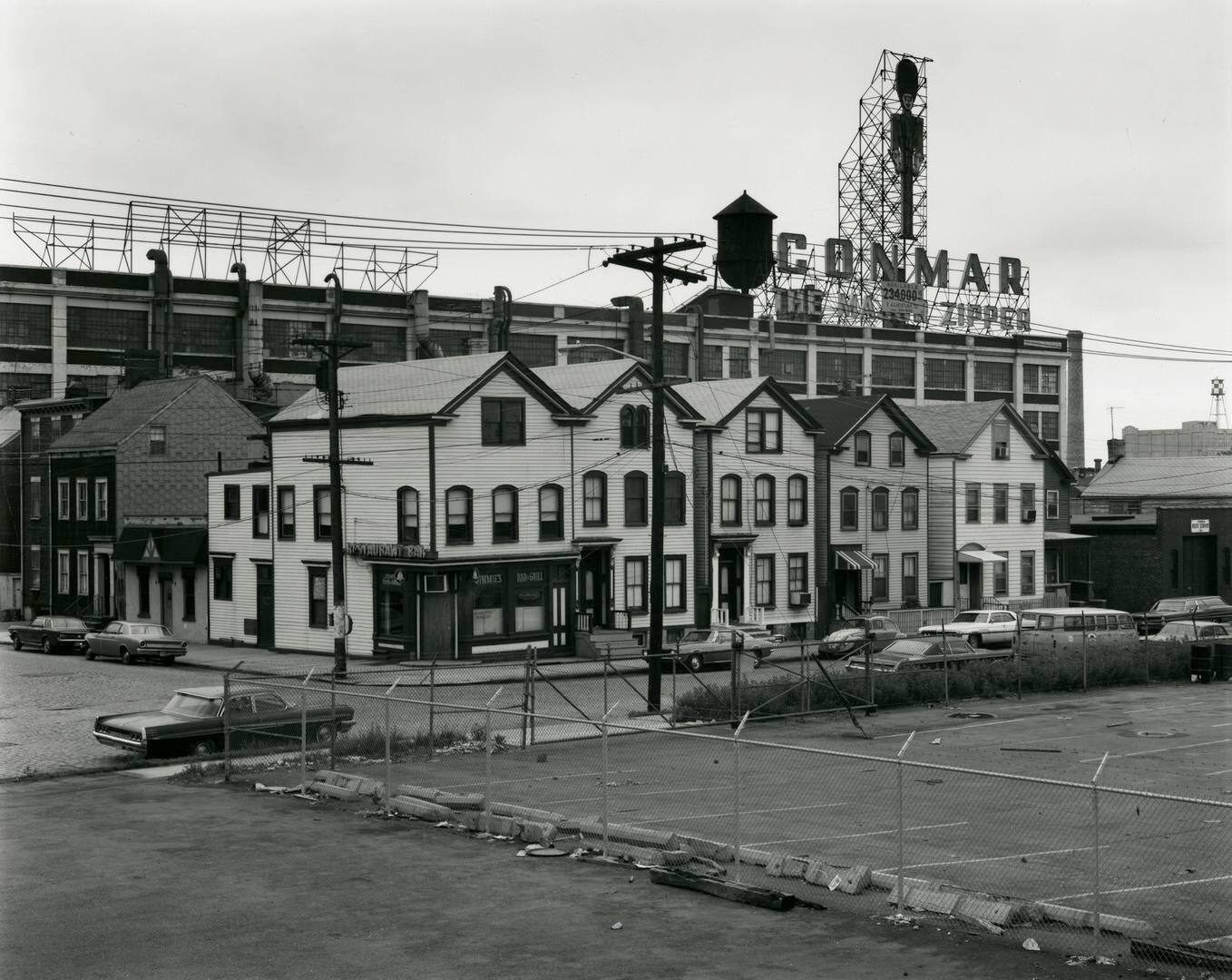
I'm afraid we are a little late to book a group tour of Waterman's New Jersey factory. Would surely have been interesting. Waterman left it not long after the publication of the entry above, moving its Newark  operations back to New York in early 1941 (an announcement that the move was pending appeared in the Brooklyn Eagle on September 11, 1940, p. 23). The Conmar Zipper Company and the Margon Corporation moved in shortly thereafter and stayed for decades. There are some reminiscences about Conmar posted in this Reddit thread; George A. Tice took the photo below in 1973. 


Margon was a major manufacturer of dolls and doll parts, notably heads and glass eyes. It seems that the building was only torn down in the mid-1990s after standing empty for several years.

Thursday, February 8, 2024

Waterman and Heath

It has long been known that Waterman purchased overlays from George W. Heath & Co. A number of early Watermans bear silver overlays with the Heath "H" mark, and though the mark is absent on later examples, the continuity of style and workmanship strongly suggests continuity of sourcing. The same pattern of marking is seen with other penmakers using Heath overlays, and it is reasonable to suppose that all eventually chose not to give their subcontractor free advertising -- especially as Heath began to manufacture and sell fountain pens under their own name around this same time. It is not known why the Heath mark only appears on the silver overlays and never on gold filled or solid gold examples, even though their common source is clearly evident.

Nearly ten years ago I wrote the following about Heath's operations from the mid-teens onwards:

While the company continued to offer items under the Heath name, by all evidence the bulk of its business lay in contract manufacturing. Quantity of surviving examples isn't always a reliable gauge of quantities produced, but in this case the contrast between the scarcity of Heath-branded pens and pencils and the size of the factory and workforce is too stark to ignore. I strongly suspect that Heath continued to be the prime supplier of high-quality overlays to the US fountain pen trade as long as overlay pens continued to be made. In particular, Heath was probably the maker of all of Waterman's overlays -- early electrodeposited fine silver examples a possible exception -- from around the turn of the century all the way to the end of overlay pen production at some point in the 1930s. Waterman often publicized its production methods, and in some detail, yet never in any of these accounts is there any mention of in-house manufacture of overlays.

This speculation about the company's later history must now be amended, as there is good evidence that Waterman was manufacturing overlays in-house by at least the beginning of the 1920s. This is found in the description of Waterman's newly completed and occupied factory in Newark, New Jersey, published in the American Stationer of March 26, 1921 on p. 11 (and subsequently republished in other periodicals, such as Pacific Ports, June 4, p. 158, and India Rubber World, August 1, 1921, p. 840). The factory was notable for both its size and the horizontal integration of operations, including ink production and the distribution of dealer display material. On the third floor was the "gold and silver mounting department" and on the second, the "chasing and ornamental mountings department" -- "mountings" being the contemporary term for what we call overlays (also used to denote trim bands, but in this context clearly referring to overlays as well). I have not been able to find any mention of such departments in earlier Waterman factories, but for now this should be taken as absence of evidence rather than evidence of absence. 

What was Heath doing at this time? In my 2014 post I noted that "The later history of Heath is particularly obscure, with many of the usual online sources unavailable in volumes postdating the 'teens." Yet it was clear that the company was moving in new directions in the early 1920s: 

The brothers were already diversifying . . . while they held a number of patents, the latest that has anything to do with writing instruments is US 1514965 (an extending pencil), applied for in 1922. All subsequent patents, starting with US 1605723, also applied for in 1922, are radio-related, and from the 1923 Newark city directory on, we find the Heath Radio and Electric Manufacturing Company ("radio parts and condensers") listed alongside George W. Heath & Co. at the same address. 

While the (possibly older) company letterhead still proclaimed George W. Heath & Co. "Manufacturing Gold and Silversmiths" as well as "Patentees and Sole Manufacturers of Heath's "Tribune" Pencils and Fountain Pens" in a receipt dated October 26, 1923, the company had also placed a wanted ad a year before in The Iron Age seeking to buy a screw machine -- a large investment and a clear commitment to automated mass production.

In retrospect, my interest in Heath's overlay work led me to underestimate the extent of their pen and pencil manufacturing operations. It should have been clear that Heath was moving into manufacturing in a big way in the 1910s -- mass production, not artisanal hand work -- and I have recently found further corroboration of how early this started in the April 19, 1911 testimony of Hobart W. Geyer in the legal battle between Waterman and the Modern Pen Company, appealed all the way up to the US Supreme Court. On p. 1419 of the record, Geyer is asked, "Have you been in any factory during the last three years?" to which he answers, "I have been in Heath's several times in that time." "What kind of factory is it?" he is asked, to which he answers, "They make rubber holders and they make mountings." On the following day another witness, gold nib maker DeWitt C. Van Valer, also mentions Heath's factory in an exchange recorded on p. 1517. "When were you in Mr. Heath's factory?" "Within the past year." "Mr. Heath is a comparatively new man in the manufacture of rubber holders, is he not?" "I think he has been turning holders to my knowledge for the last four years, and may have been turning them before that." This lines up with the change in how Heath's business was described in directories of the time, from chasing and gold and silver novelties to fountain pens and pencils. This also lines up with the expansion of Heath's workforce and the move to a new factory in New Jersey in 1912. The demand for hand-worked gold and silver was declining, not growing: it wasn't the traditional bench jewelers leaving New York for New Jersey, but rather the manufacturing firms that required ample floor space for large machine tools and multistep production operations.

At this point we can only speculate about what happened in the 'teens and early 1920s, as Heath moved away from handwork and Waterman brought overlay manufacture in-house. I have found no record of workers moving from Heath to Waterman, let alone a formal transfer of a whole department. But skilled workers in the pen trade often moved from company to company, as is shown repeatedly in the testimonies cited above. And with Heath and Waterman's Newark factories only a little over a mile apart -- neither unionized -- continuing cooperation at some level can by no means be ruled out.

Tuesday, January 16, 2024

Please stop calling them "Continental safeties"

Once upon a time and long long ago, American collectors would occasionally come across safety pens with fancy overlays like the one shown above. They knew that these pens were European but not much more, so borrowing a usage from the antiques trade they started to call them "Continental" -- the umbrella term for furniture that was neither American nor British, but from somewhere in continental Europe. You don't see antiques called "continental" as much nowadays; the trade is more sophisticated and less insular, greatly reducing the need for catchall categories of this sort ("oriental" or "Asian" is another, much less used now with increased ability to differentiate between antiques from China, Japan, Korea, etc). And yet "continental" persists among pen collectors, even though English-speaking collectors have known for at least thirty years now that these fancy overlays are distinctively Italian and not generically European at all. This may largely be force of habit among older collectors, with the continuing influence of classic reference books a factor as well.

Let us finally retire "Continental" -- it is misleading and obsolete. Let us give credit where credit is due and call these pens what they are, which is Italian. No other country had so many independent workshops making such a variety of overlays, nor can the characteristic style and elaboration of these Italian overlays be mistaken for the product of any other European country. Not that French and German overlays aren't also distinct in design and style -- which is all the more reason not to lump them all together under the same catchall name.