This ad is from a 1910 issue of The Bookseller & Stationer, a Canadian trade periodical. It nicely illustrates how stationery stores would contract to have fountain pens (and other products) made under their own names, and that many pen companies were happy to supply them. Most were like Sanford & Bennett in being New York based and not in the top rank when it came to market share and brand recognition.
A blog about antique and vintage writing instruments: fountain pens, mechanical (propelling) pencils, dip pens, and more.
Saturday, May 9, 2026
Friday, February 9, 2024
Touring Waterman's Newark factory
![]() |
| New Jersey: A Guide to its Present and Past, 1939, p. 335 |
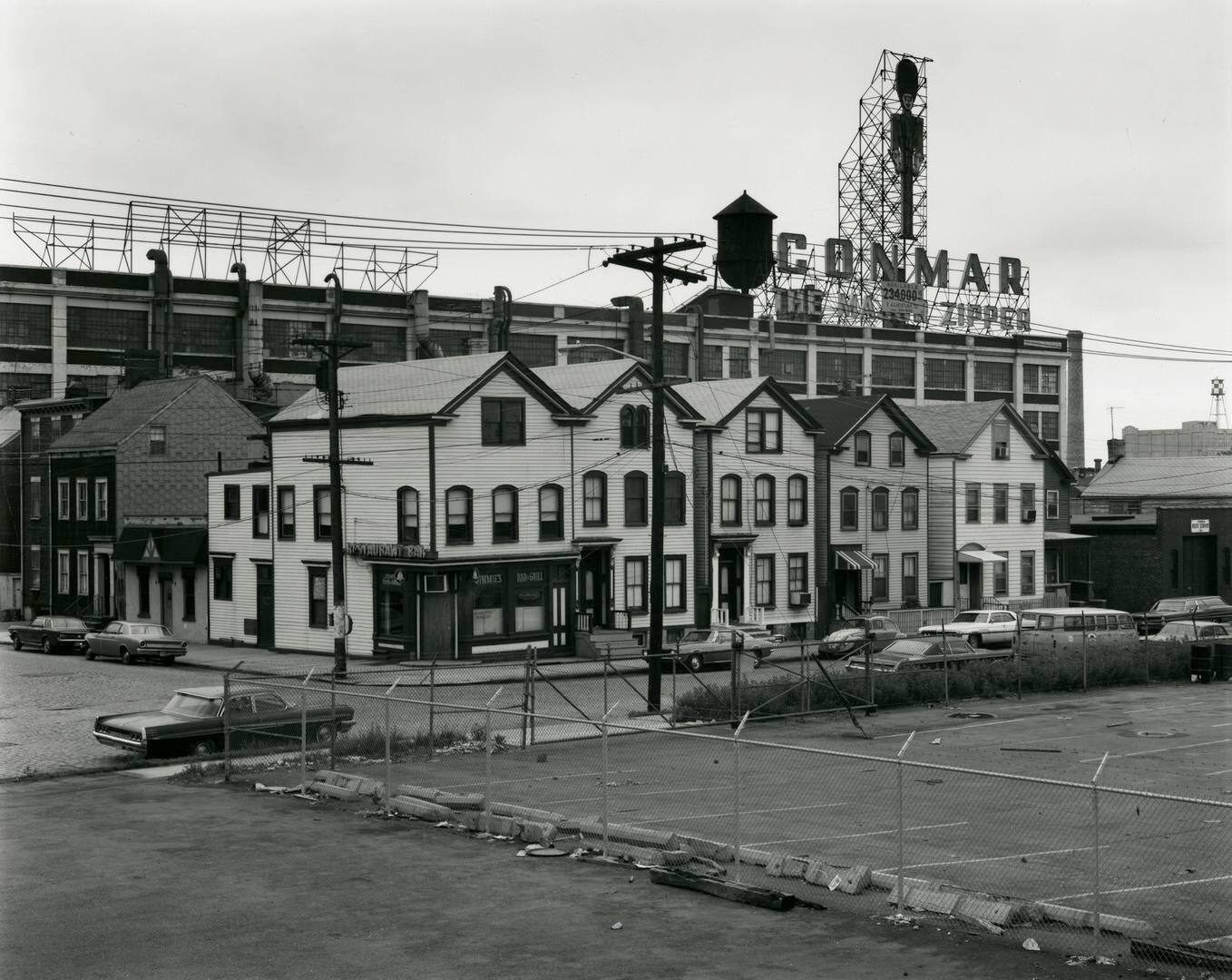
I'm afraid we are a little late to book a group tour of Waterman's New Jersey factory. Would surely have been interesting. Waterman left it not long after the publication of the entry above, moving its Newark operations back to New York in early 1941 (an announcement that the move was pending appeared in the Brooklyn Eagle on September 11, 1940, p. 23). The Conmar Zipper Company and the Margon Corporation moved in shortly thereafter and stayed for decades. There are some reminiscences about Conmar posted in this Reddit thread; George A. Tice took the photo below in 1973.
Thursday, September 8, 2022
Remembering W. M. & C. -- and not for Nott
This lovely pencil arrived not long ago but to my frustration I could not recall what the letters "W. M & C" stood for. No luck with a Google search, nor checking Jon Veley's indispensible site. It was Jon who finally set me straight though, pointing me to . . . my own blog post here on Thomas Addison. Ouch.
At least I remembered that the "W" was for "Wilmarth". That alone should have sent me back to my research notes. Anyway, Wilmarth, Moffat & Curtis was the short-lived partnership that succeeded the partnership of Thomas Addison & Co. as of August 1, 1829. It apparently ended with the death of Jonathan Wilmarth on September 26, 1835, though another Wilmarth – William M. – subsequently formed a new partnership with Addison, doing business as Addison, Wilmarth & Co. up until c. 1843. In 1849 Moffat and Curtis sailed for San Francisco, where Moffat won lasting fame among numismatists and California Gold Rush historians for his gold ingots and coins.
What first caught my eye about this pencil, though, was the seal end. It was clearly a portrait, not an idealized classical bust. Before the pencil arrived it seemed likely it might be someone prominent enough that someone might recognize the image. The task was considerably simplified, however, by the discovery upon arrival that the pencil had been engraved with the name, "Mrs. Howard Nott".
While the identification is for now tentative, it seems probable that this pencil belonged to Margaretta Matilda Stewart Bowers Nott (1810 – 1876), who in 1831 married Howard Nott (1809 – 1880), the son of polymath Eliphalet Nott (June 25, 1773 – January 25, 1866; described by Wikipedia as "a famed Presbyterian minister, inventor, educational pioneer, and long-term president of Union College, Schenectady, New York"). Though I have not yet been able to find any portraits of Howard Nott, pictures of his father show a decided resemblance to the profile of the pencil seal bust.
Margaretta Nott was buried in Brooklyn, at The Evergreens Cemetery on Bushwick Avenue. No photos online, but it is now on my list of historical graves to visit in the greater New York area.
Friday, December 10, 2021
A bronze-nibbed dip pen from 11th-century Ireland
The form of the nib is such that my colleague Andrew Midkiff has suggested that it might be a specialized ruling pen. Certainly the rolled metal sheet construction would have been much more demanding than that of a more conventional quill-pen shaped metal nib -- but unfortunately examples of medieval metal nibs are so rare that definitive conclusions cannot be deduced from available evidence.
Friday, February 28, 2020
Hicks and Tiffany
It's long been clear that many pens and pencils were not actually manufactured by the companies that sold them. The majority of so-called makers relied heavily upon subcontractors. In some instances parts were purchased and assembled. At other times all was done by other firms. This is nicely illustrated by two pairs of sterling silver pencils, nearly identical but for their markings. All were made by Hicks, but one of each pair bears Tiffany markings instead.
The first two, at top, are good-sized magic pencils with octagonal barrels. They really are near-twins, the main difference being the treatment of the end knobs. The Tiffany version has a reserved rectangular cartouche on the shaft for the imprint, whereas the Hicks version carries its imprint on the front ferrule, with the Hicks acorn.
The second pair is of unusual form. They are both cedar pencil holders, but where most such holders use a slider to extend and retract the wooden pencil insert, these are twist-action and very heavily constructed. The markings are much the same as those on the magic pencils.
Once again the main stylistic difference is in the treatment of the end caps, though with these two there is also a significant difference in overall length and in the form of the scrolling surface decoration. Beaded bands, characteristic of Hicks, are present on both.
Wednesday, January 9, 2019
A 1947 snapshot of the German fountain pen industry
At the most recent Madrid pen show Duncan Sewell was selling reprints of a most interesting British government publication. Titled simply "German Fountain Pen Industry", this is a 29-page report published in 1947 by the British Intelligence Objectives Sub-Committee (B.I.O.S. Final Report No. 911, Item No. 35). This particular reprint is of a copy bearing the library stamp of The Institute of Mechanical Engineers, dated 20 Jan 1947, indicating publication at the very beginning of the year and compilation the year(s) previous. The report is not unknown, as there is an Open Library record for it, as well as a listing on the Books About Pens site, but as far as I can see there is no online access to digitized copies at this time.
The report is one of many that came out of the Allies' attempts to assess and manage the situation in occupied Germany. There is clear concern for getting German factories back to work, but the report openly puts Britain's interests first, both in protecting British penmakers' market share and access to raw materials, and in copying private German commercial technology for the benefit of the British pen industry. On page seven, in fact, there is a list of proprietary machine tools to be taken back to the UK for study, basically as spoils of war.
Given the constraints of time and access (the inspectors were only able to work in the British Zone, though they attempted a visit to the US Zone, which included among others Kaweco, Osmia, and Merz & Krell) the report is of limited scope and detail, but there are some noteworthy bits of information to be found. Some that I found especially interesting follow.
The inspectors found that prewar German penmaking capacity was mostly ("at least 80%") intact, but at "a complete standstill" due to lack of raw materials, celluloid in particular. In contrast to what had happened in the USA during the war, where pen factories shifted production capacity from pens and pencils to war materiel -- typically precision parts for fuses, bombsights, and the like -- the German government had largely kept its penmakers making pens:
"During the war period the industry worked to maximum capacity producing Pens as it was considered to be an essential Export, by reason of its high price; the small amount of material used and minimum amount of freightage involved.
The main Export markets were Sweden, Switzerland and The Balkans. Incidentally, if gold nibs were required, gold was supplied by the importing country."
Pen collectors have generally assumed that the withdrawal of gold nibs from the German market in 1938 meant that German penmakers stopped making gold nibs then. For export sales, however, this did not apply.
How many pens were the German penmakers turning out in this era, and prior to the war? The inspectors estimated production capacity in the British Zone to be something like twice as great as demand in the same zone. Planned output as directed by occupation authorities was to be 207,000 pens and 30,000 pencils per month, with full capacity of the industry within the British Zone at least twice that.
The report notes that most of the large firms were fully self-sufficient, while the smaller firms typically relied on specialist subcontractors in Hamburg or Pforzheim for metal parts. Celluloid tubing was identified as the main raw material used, and it was further noted that before the war the British pen industry had imported "a considerable amount" of the tubing that they used from Germany, which was also the principal exporter of celluloid to Britain. This was of particular concern, since the inspectors reported that after the war there was only one British supplier of celluloid tubing, B.X. Plastics, whose capacity was insufficient to meet British demand.
According to the inspectors, the German penmakers also made wide use of clear polystyrene tubing for ink windows, solvent-welding it to celluloid tubing as required. Rolled gold (gold filled) trim was not available at the time, only plated. The 1938 restriction on gold nibs had not been lifted, and at the time of the report still only steel was permitted.
It was recommended that a portion of German celluloid production be allocated to the UK, and that German pen export be restricted until the British pen industry had recovered. The suggestion was also put forward that export of German steel nibs to Britain be considered for use in lower-end pens, given the acute shortage of gold nibs in the UK, and that German pencil mechanisms be exported to Britain to be made into pencils for export.
One gets the impression that the report was written by men with long practical experience in the pen industry, rather than by professional administrators or academics. Capitalization is rather haphazard, and no allowance is made for foreign tastes -- though the high quality and precision of German manufacture is duly acknowledged throughout (at least for the top brands). For example, in the introduction, regarding German pens and pencils in general (p. 6):
"In the main, both Pens and Pencils are of clumsy design and inferior to United Kingdom designs"In the section on Montblanc (p. 12):
"The products of this factory, whilst being rather inferior in external design, were of high quality and workmanship. A system of floor inspection exists, and rigid tolerances in dimensions and finish appear to be the rule."And in the section on Pelikan (p. 17):
"In respect of design, the products of this factory are not up to the standard of either U.K. or U.S.A. Fountain Pens and Propelling Pencils, but the quality of workmanship and finish is of the highest order."The inspectors also tended to focus on techniques and tools that differed from British practice, and so did not bother to describe manufacturing methods shared by German and British makers -- however interesting and useful that might have been to us now. And even when methods are discussed, it is often in the briefest of terms. For example, Montblanc's method of tipping nibs was noted as being of particular interest, yet without description of that method. A little more can be gleaned from the comments on Pelikan's nib operation, where it is stated that their electric welding of nib tips closely resembled the practice at Montblanc, and entailed the use of a "simple carbon block (negative) with a flexible carbon finger to complete the circuit". But this is still far from enough to reconstruct the full operation in any detail. One tidbit that is comprehensible, if phrased in decidedly nonmodern terms, is that "much thread cutting was done by stone" at Pelikan -- which is to say, threads were cut by grinding, rather than by dies or single-point on a lathe. The inspectors also took an interest in the common German practice of black lacquering of components, especially barrels. They recorded that at Montblanc both spraying and immersion was used, with hot air to speed drying, and at Pelikan they requisitioned the formula and samples of the cellulose solution used to blacken the grip section of one-piece transparent barrels.
Of course the report noted war damage. Montblanc's factory was described as about 50,000 square feet of which 60% was usable, the rest war-damaged. Wartime production was 66% pens and pencils for export and 34% small metal screws for applications unknown to Montblanc. Pelikan's factory was recorded as having received blast damage only, and had not been used for war production -- perhaps in part because of their larger degree of automation in production and corresponding reliance upon purpose-built machines. Soennecken was described as making only steel dip pen nibs and office equipment, with no production of either fountain pens or mechanical pencils. 30% of their building was out of service from fire damage
Wednesday, July 5, 2017
1942 time capsule
These items all came from an Oakland, California shop owned by Japanese-Americans who were interned shortly after America's entry into WW2. The family did not reopen the shop after the war. These leftover items remained in storage for some 75 years before being offered to us. Opening the package was a moving experience; some items were packed with bits of contemporary newspaper, and two letters from Waterman to their dealers were dated only shortly before Pearl Harbor turned everything upside-down. A good number of the items in the group were contemporary Watermans, stickered and mostly boxed. There were also a few older pens, including a few Waterman overlays and a couple of solid gold Conklins from the 1920s or early 1930s -- expensive and for most retailers, slow sellers. Most notable, however, was the large number of colorful Japanese-made celluloid Pilots, unusual enough but doubly so as export models with English-language labels, boxes, and instruction sheets. Cheap Japanese novelty pens were widely imported in the prewar era, most notably the now-ubiquitous stubby jumbos and glass-nibbed SPORS crescent-fillers. Better-quality prewar Japanese pens were another story, and any found in the wild in the USA were likely acquired by soldiers as war trophies or purchased during the postwar occupation. This hoard represents an exceptional case, with Japanese goods that would have found little interest outside of the Japanese-American community. In fact, the Pilots were far from cheap, with the prices penciled on the bottoms of the boxes running from $3.50 to $7 -- in the same range as the contemporary Watermans, which were mostly priced around $3, with a large Hundred Year priced at $8 (with the Watermans decidedly better made).
Some of the Pilots are conventional lever-fillers, but most are either plunger-fillers (US patent 2070461) or the distinctive nomikomi-shiki (呑込式) "easy-drink filler". The nomikomi-shiki pens have a special long-tailed feed and internal celluloid reservoir. They are filled using a special bottle with a central opening into which the pen can be inserted nib-first, sealing around the section. Bottle and pen are then inverted together, allowing ink to flow through the feed and into the pen's reservoir. Since the latter design was only patented in the US on January 17, 1939 (patent 2144296), the mention of the US patent in the instruction sheets helps narrow down the date of these particular examples.
Factory-new nomikomi-shiki pens must be exceedingly rare, so I made sure to make notes when taking one apart. The celluloid barrel is a slip fit over the section, not at all tight, but instead held by a thick, tacky transparent compound. The same substance holds and seals the clear celluloid reservoir housed inside the barrel. The reservoir is made of very thin material, and though it is threaded to match the threads on the section nipple, it is so loose that it can be pulled straight off, resistance coming almost entirely from the sealing compound. Using plain cold water on a cotton swab, I cleaned off the compound from the inside of the reservoir, only to find that exposure to water was enough to cause the material to open a crack along its longitudinal seam. Clearly, these pens should be preserved as relics, as they are emphatically not users! I did carefully measure the reservoirs, though, as it would be very easy to make new ones out of sturdier modern plastic.
I have been promised more information about the store and the family that ran it. When that comes, I am looking forward to publishing a much more extensive and comprehensive article about these pens and their singular history.
Sunday, March 6, 2016
Precious aluminum
Many collectors and dealers are well aware that aluminum is a relatively new metal, and that when first produced, it was considered precious -- more precious, even, than gold. Many fewer, however, are clear on exactly when aluminum became cheap and plentiful -- leading to rather drastic misinterpretations of the original value and nature of early 20th-century aluminum objects.
A bit of digging turned up some good basic aluminum history (links here and here), which incidentally also provide a bit of background on why US usage is "aluminum" while most of the rest of the world prefers "aluminium".
Perhaps the most useful references I found, however, had to do with the famous aluminum capstone of the Washington Monument, in particular George J. Binczewski's "The Point of a Monument: A History of the Aluminum Cap of the Washington Monument", and especially the sidebar entitled "Aluminum's Status in the Mid-1880s". Also of interest is this article on the use of corundum crystals for the capstone, other forms of naturally-occurring aluminum being of insufficient purity.
One of the best short summaries comes from the USGS, in .pdf form; the key excerpt runs as follows:
As late as the early 1880’s, it was considered to be a semiprecious metal and was sold in troy-ounce quantities; the retail price of aluminum metal was reported to be higher than that of silver. A commercially viable large-scale production method had yet to be developed. Domestic production levels during this period were in the 1,000- to 3,000-troy-ounce range, and many uses were considered to be experimental (Mining Engineering, 1987).Some further bits and pieces turned up along the way:
In 1886, formal patent applications were filed for the electrolytic reduction process for aluminum. This process, which came to be known as the Hall-Heroult process, led to the mass commercial production of aluminum metal. As the process was developed and refined, production levels increased rapidly. By 1895, domestic production levels had reached 1 million pounds. As production levels continued to increase, domestic producers kept the price of aluminum low to encourage its use by consumers. In the early 1900’s, they held aluminum metal prices at a low steady level to compete against copper in the electrical industry (U.S. Department of Commerce, 1956, p. II.1-II.4).
The widespread tale that Pliny describes something suspiciously aluminum-like in antiquity is a fraud: in the words of Laputan Logic,
. . . a carefully constructed myth that was promulgated by Napoleon's very own aluminium guy, Henri-Étienne Sainte-Claire Deville, the man founded the world's first commercial aluminium process with the generous support of the Emperor.For more reliable aluminum history, I am in the process of getting my hands on a copy of the exhibition catalog, Aluminum by Design: Jewelry to Jets; a couple of the essays appear to be reprinted online here and here. [originally published July 22, 2006 at Cronaca.com -- some links now broken]
Sunday, February 21, 2016
California Constitution signing pen
Friday, December 19, 2014
An unusual wartime Sheaffer
The over-the-top "military" clip is another characteristic wartime feature, allowing the pen to sit low enough in a uniform blouse pocket so as not to interfere with closure of the pocket flap. But the wartime features of this particular pen don't stop there. The section is celluloid, rather than hard rubber (rubber was a critical war material) -- not uncommon -- and so is the plunger shaft.
Wartime plunger-fillers typically used celluloid-covered carbon steel plunger shafts instead of stainless steel. These worked well enough, though the carbon steel was susceptible to rust swelling should any moisture penetrate its coating. All-celluloid shafts were another matter, as they were insufficiently rigid and prone to warpage. They are rare enough today that it is likely that they were only made experimentally -- and quickly rejected.
It would be easy enough to retrofit this pen with a postwar stainless shaft and matching blind cap (the original blind cap has a simple unthreaded hole into which the celluloid shaft press-fits), but we have put it back together as it was made, minus its original piston seal washer -- not functional as a pen, yet eloquent as witness to an era.
Monday, January 27, 2014
Back to the future (of pen collecting)
If it should ever become a fad to collect pens, what a collection could be made from ancient and modern writing instruments . . .The article goes on to recount how McKinley's letter accepting the Republican nomination for president -- published nationally a few weeks before -- had been signed with a Waterman pen, specially furnished for the purpose, and that that very pen (a 5-sized taper-cap) would be auctioned for charity. It concludes:
It would be a good pen for a prospective collector of writing instruments to begin with, as it is probably one of the pens destined to be famous in history.No doubt -- if only it could be found now!
Friday, September 20, 2013
Søren Kierkegaard's silver dip pen at auction
Saturday, August 17, 2013
Graf Zeppelin dip pen
The details -- gondola, engine nacelles, tailfins -- are in low relief, allowing the pen to be held comfortably for writing. Clearly, this was intended as a functional novelty item.
This example, like most, is lightly engraved with the owner's name. It bears the usual Estonian silver hallmarks (835 fine, rather than the 925 of sterling), but no maker's mark. Quite a few of these Graf Zeppelin dip pens are marked with the "OV" stamp of Tallin silversmith Oskar Vük, leading many to assume that Vük was the maker. Yet the absence of a maker's mark on the other specimens indicates that a maker's mark was not required, and that the "OV" stamp may in fact be a retailer's mark (noting also the very real possibility that Vük was the manufacturer, but left off the "OV" stamp on pens to be sold to other retailers).
Thursday, August 1, 2013
Another pen with an airship connection
This oversized Parker belonged to Major Walter W. Vautsmeier, who died on February 21, 1922 in the fiery crash of the Roma, an Italian-made semi-rigid dirigible and the last US military airship to be filled with hydrogen. According to the University of Illinois Alumni Association's Alumni Quarterly and Fortnightly Notes, vol. 7, no. 11, Mar 1, 1922, p. 156, Vautsmeier had been an aviation instructor during World War I at Kelly Field, and had hoped to become one of the Roma's pilots. At the time of his death, Vautsmeier was serving in the Coast Artillery Corps, assigned to the Air Service (Aerial Age Weekly, Mar 6, 1922, p. 610).
The crash of the Roma did not impress itself upon historical memory as did the Hindenburg disaster. There were no newsreel cameras to record its demise, and though the loss of a brand-new airship with 34 deaths made headlines nationwide, in time the Roma was largely forgotten -- though not before ensuring that US military airships would henceforth be filled with helium. Vautsmeier's big Parker came to us without any provenance or accompanying items. There are no signs of scorching or overheating, so it seems likely that it was not aboard the fatal flight, given the intensity of the fire following the crash. For more photos of the Roma, before and after the disaster, and a full account of its last flight, see this 2010 article.
Friday, July 19, 2013
A Zeppelin-sold fountain pen
Thursday, June 20, 2013
1942 Sugar Bowl pin
You may have to click on the detail above, but the football is clearly stamped, "JAPAN". The attack on Pearl Harbor had taken place just a bit over three weeks prior; this was probably one of the last such trinkets, at least for a good long time.
Saturday, June 8, 2013
President Taft's other pen
A while ago I wrote about a special Waterman made for presentation to President Taft. Inquiries about this pen to the William Howard Taft National Historic Site in Ohio went unanswered, so I'll try to contact them once again this coming week. In the meantime, here is a picture of a presentation pen that the Taft site definitely has in their collection. According to the description at the Ohio Memory site:
This gold quill pen was presented to William Howard Taft by Pope Leo XIII in 1903. The pen was used in signing the agreement between the Vatican and United States stating that the church-controlled land in the Philippines would be sold to the Philippines.
Sending an Eversharp home
Friday, February 8, 2013
Stanhope souvenir dip pens
Listing a group of these pens in our catalog a while back, I realized that I needed to know a bit more about Stanhopes. Jean Scott's Stanhopes: A Closer View was very informative about the details of history and production (the link is to the Amazon listing, but I found a copy much cheaper on eBay), but didn't say much about how to photograph Stanhope images. Fortunately, Jean Scott's husband Ken explains the basics here. So now I am keeping an eye out for a good deal on a basic microphotography setup -- yet another of so many projects!
Incidentally, you can still order custom Stanhope views and viewers. Take a look at this site to learn more -- though be warned that their Stanhope pens and pencils are a lot more expensive than ours.
Thursday, December 6, 2012
William Wrigley Jr.'s golden Wahl
Even more notable, however, is the name engraved on the barrel: "Wm.Wrigley Jr./Chicago". Although the pen has no documentation of provenance, it was sold largely at gold value and there is no reason to think that the inscription was added falsely in order to enhance the pen's value.
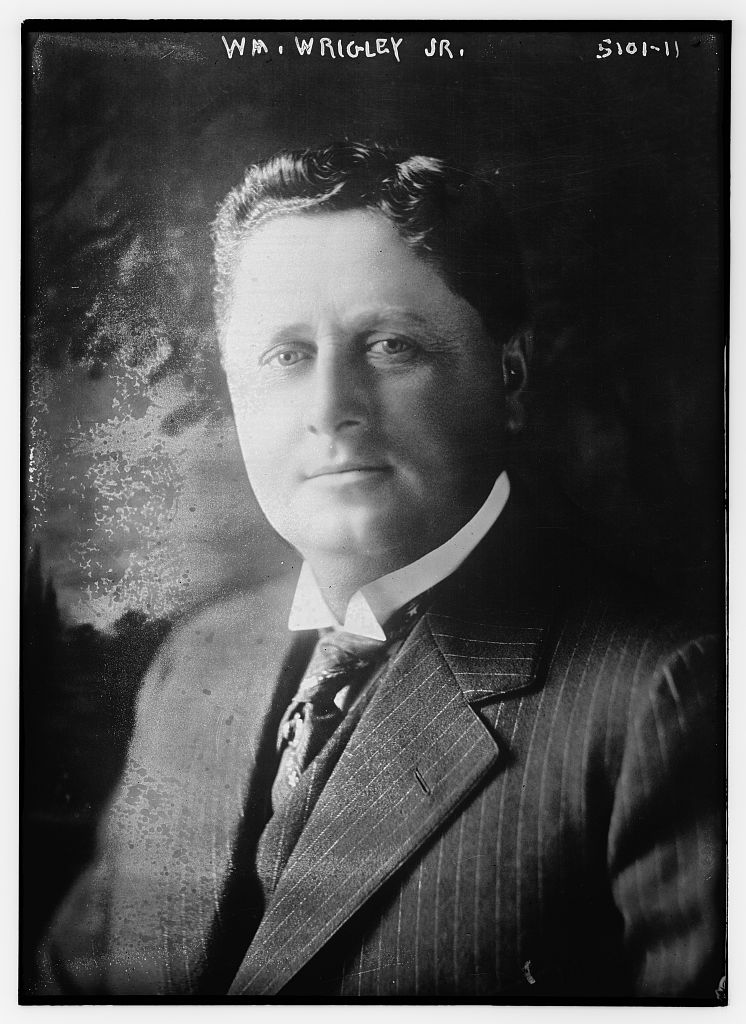
William Wrigley Jr. (1861-1932) was a prominent figure, the founder of the Wrigley chewing gum company, owner of the Chicago Cubs, and namesake of Chicago's Wrigley Field. Wrigley was also the benevolent developer of California's Catalina Island, which he owned outright.
It was only appropriate that Wrigley owned a Chicago-made pen, and it would be interesting to find out if there were any business connections between him and the Wahl company, of the sort that have already been documented, for example, between Wahl and Montgomery Ward. The sharp-eyed may notice that the pen currently bears a Mabie Todd nib. A later replacement, to be sure, but perhaps still for the original owner. The pen itself must date to the late 'teens, and most likely was worn in a vest pocket at the end of a watch fob.